

Mahalo & Mabuhay: Rooted in Gratitude & Good Will
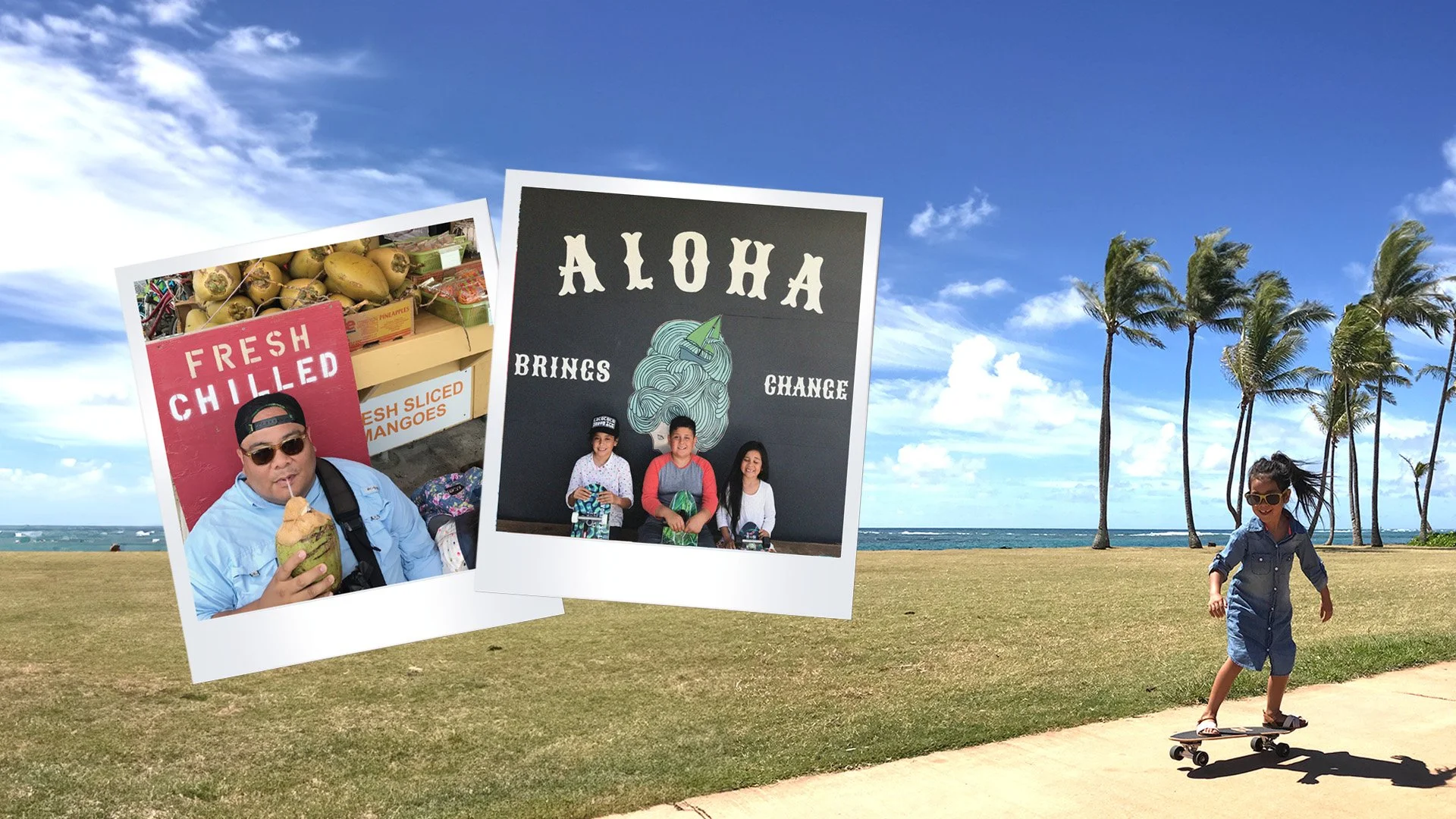
There’s a place where the world slows down, where the rhythm of life is set by the gentle sway of palm trees and the sound of waves kissing the shore. It’s called the Coconut Coast in Hawaii, and for me, it’s more than just a scenic vacation trail. It’s an oasis for deep connection and reflection. In fact, this exact picture has been my screensaver for many years now. Here, Aloha helps refocus everything, allowing the stress of life to melt away under the warm sun.
The Coconut Coast is a highlight, but it’s just one of many special locations I cherish. From the thrill of renting bikes for family rides on this trail to the joy of sipping from coconuts to quench our thirst, these experiences weave together into a rich tapestry of beloved memories. Whether I’m watching my kids ride skateboards along the Coconut Coast or putting my youngest daughter on the handlebars like we used to in the 80s, each journey brings me back to the present, where true peace and happiness reside.
After years of helping others discover their unique brand stories and identities as a graphic designer, I realized it’s time to reflect on my own. This personal reflection and tribute to my late father led me to embrace a mantra that speaks to my heritage, values, and life lessons: “Mahalo & Mabuhay.”
“Mabuhay” is a Filipino expression derived from the root word "buhay," meaning "life." It conveys a wish for vitality and growth, similar to saying, "Long live!" Combined with the Hawaiian “Mahalo,” which expresses gratitude, these words encapsulate the essence of my personal and professional brand. They remind me to be thankful for the present, wish the best for those around me, and live a full, meaningful life.
Faith grounds my soul, while biking, art, and design engage my body and mind, offering both peace and creativity. At the core of everything is family: “pamilya” in Filipino, or “ohana” in Hawaiian. Family isn’t just about blood relations; it’s how I view the world, and everyone I meet becomes part of this extended family.
I believe that the details of our interactions matter, and it’s through good greetings and solid goodbyes that we build stronger bonds. Rooted in my culture, the practice of "Mano Po" represents this "honoring gesture." Just as other cultures have their own unique expressions of respect, such as Japanese bowing (Ojigi), the Thai Wai, or the Indian Namaste, each gesture holds deep significance in showing respect and connection. In American culture, these gestures can be seen in a firm handshake, a high five, the Shaka, or even a fist bump, all of which are ways to acknowledge and honor the people we interact with.
As I reflect on my journey and the values that shape me, I am reminded that these small, meaningful gestures, whether in greetings or farewells, play a crucial role in creating a life filled with trust, purpose and connection. In my everyday lighthearted conversations and exchanges, it’s "Hey, hope all is well!" and "Many thanks, I appreciate it!" But those words are deeply rooted in “Mahalo & Mabuhay,” a mantra that honors the past, embraces the present, and looks forward with gratitude and respect.

As I reflect on my journey and the values that shape me, I am reminded that these small, meaningful gestures, whether in greetings or farewells, play a crucial role in creating a life filled with trust, purpose and connection. In my everyday lighthearted conversations and exchanges, it’s "Hey, hope all is well!" and "Many thanks, I appreciate it!" But those words are deeply rooted in “Mahalo & Mabuhay,” a mantra that honors the past, embraces the present, and looks forward with gratitude and respect.